
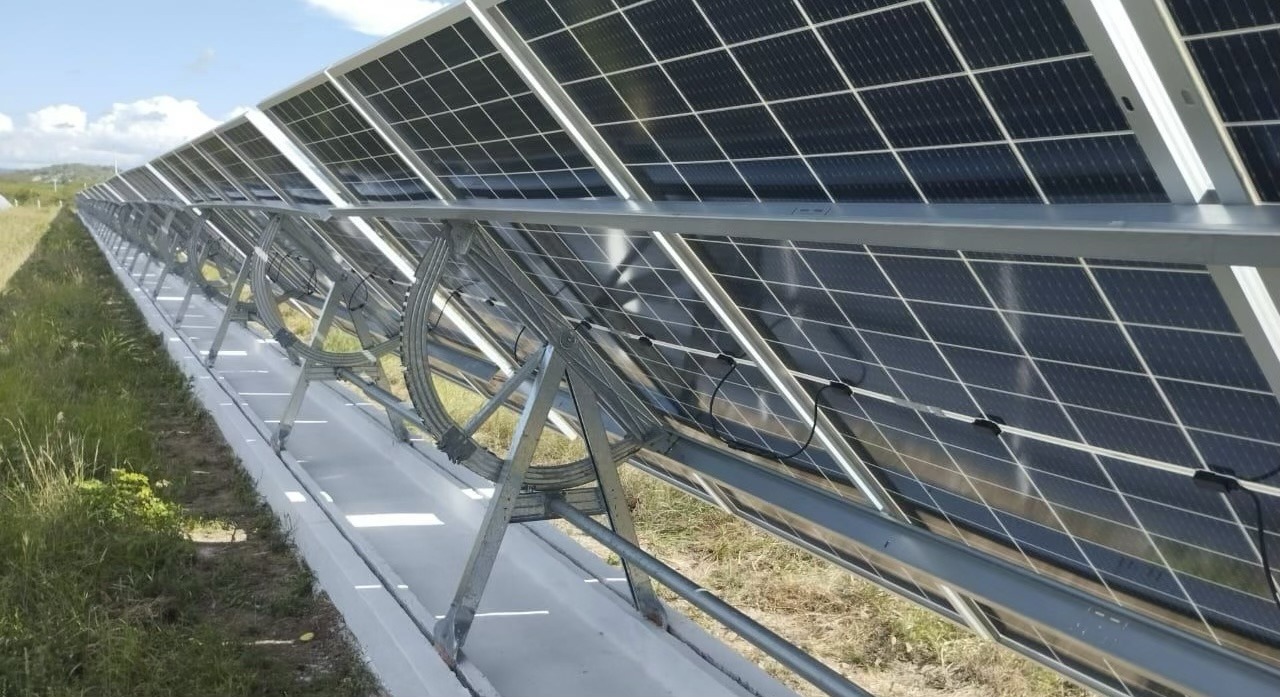
Slipform extruded ballast
01
Slipform extruded ballast
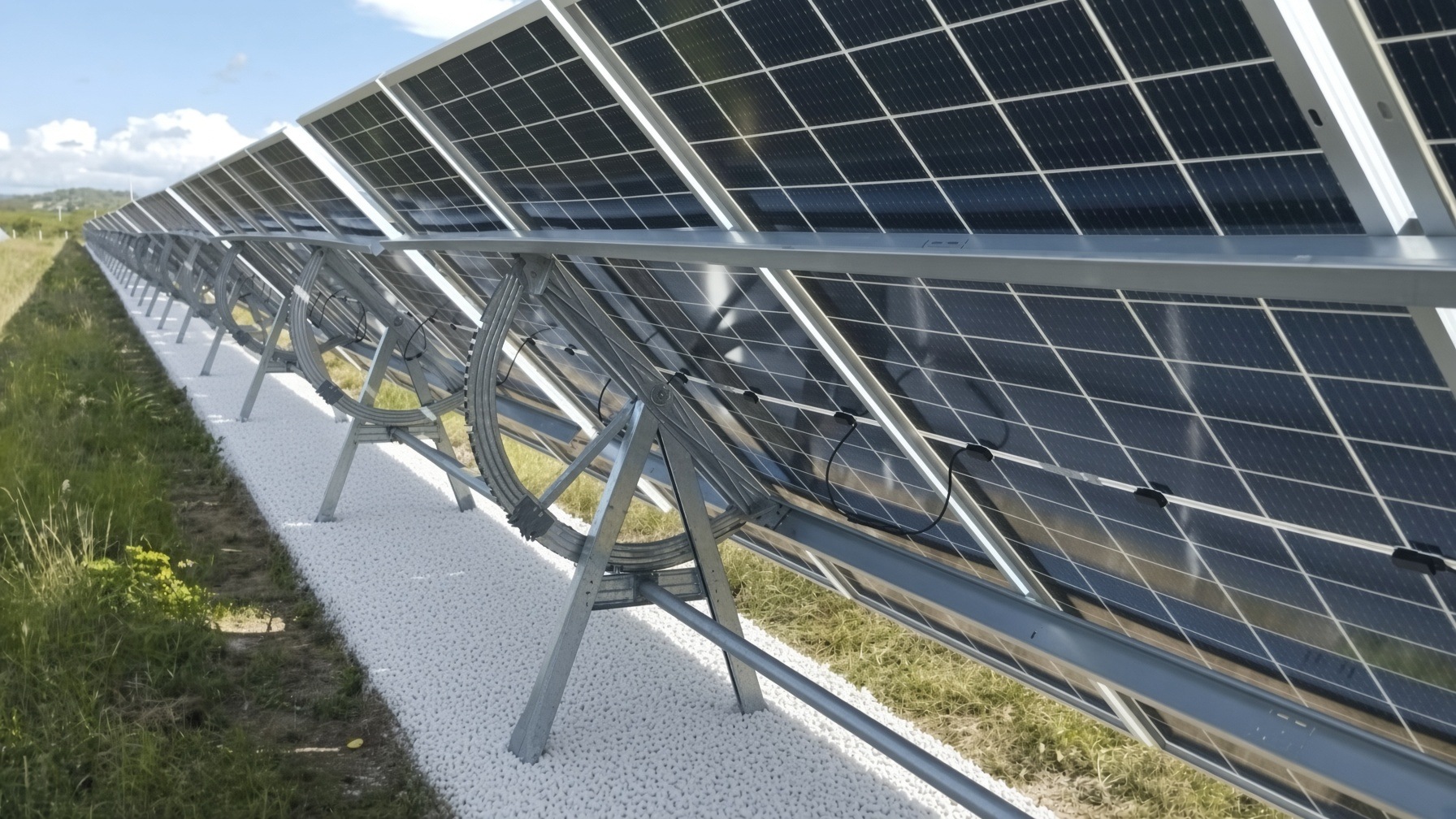
Continuous concrete track, in production since 2012. Optional white reflective finish for bifacial gain. Fire break, robot path, and steel isolation in one pour.
Supporting technologies
Komorebi does not invent a tracker or a flow meter. We manufacture licensed structures for brownfield and constrained land, and we specify mature thermal and control equipment from industry leaders.
Manufacturing licenses
Komorebi is a licensed manufacturer of Alion Energy’s A-frame Single Axis Terrain Following Tracker and of Cortex Composites GCCM. Those are the structures. Heat pumps, CSP, storage, ORC, irrigation, and metering are purchased — not licensed.
Design philosophy: raise the return on assets the customer already owns. Each part is specified to do as many jobs as physics and reliability allow. The array stays PV. A 50-acre radiator reservation is the cooling plant.
Alion Energy — licensed manufacturer
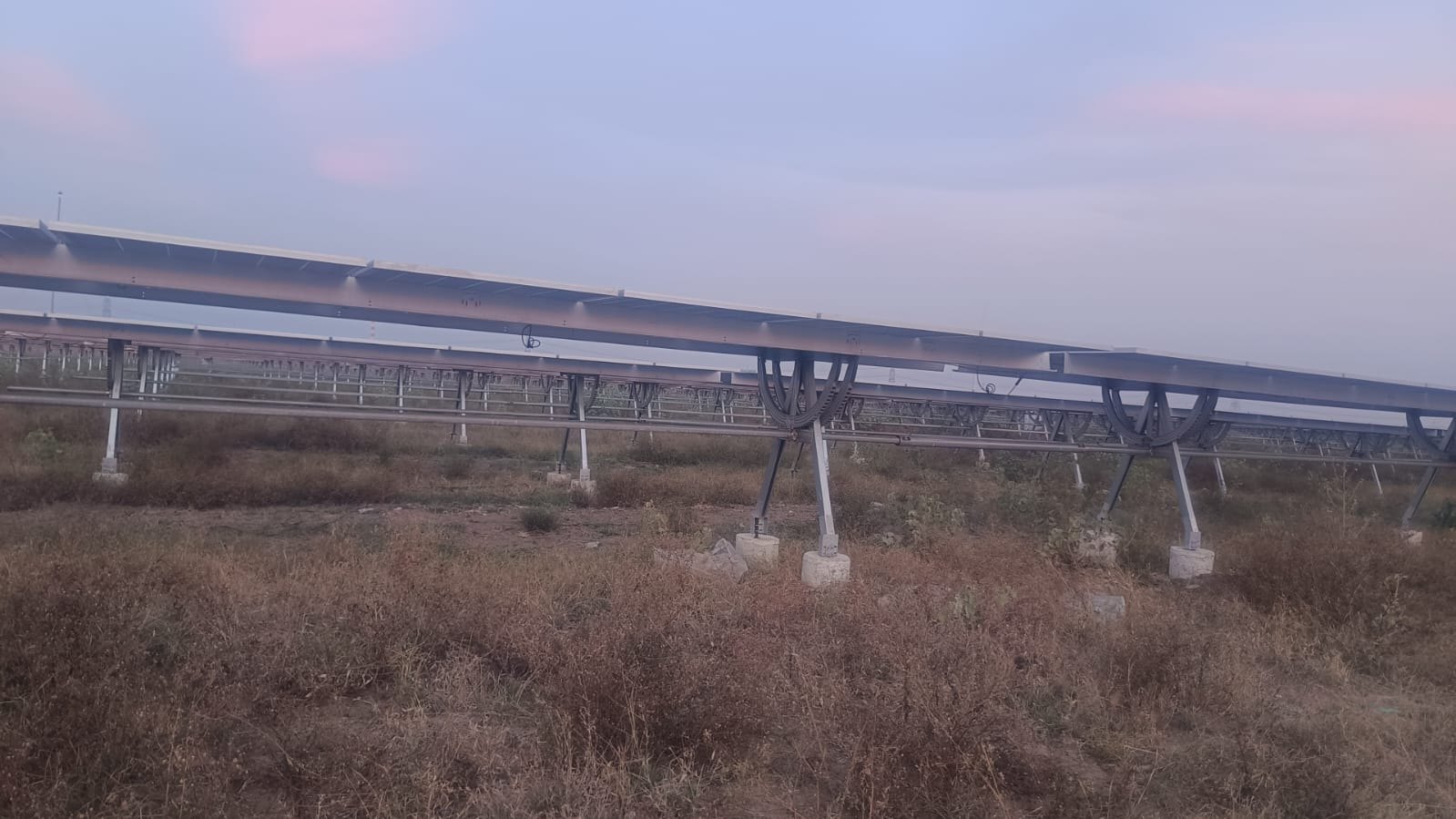
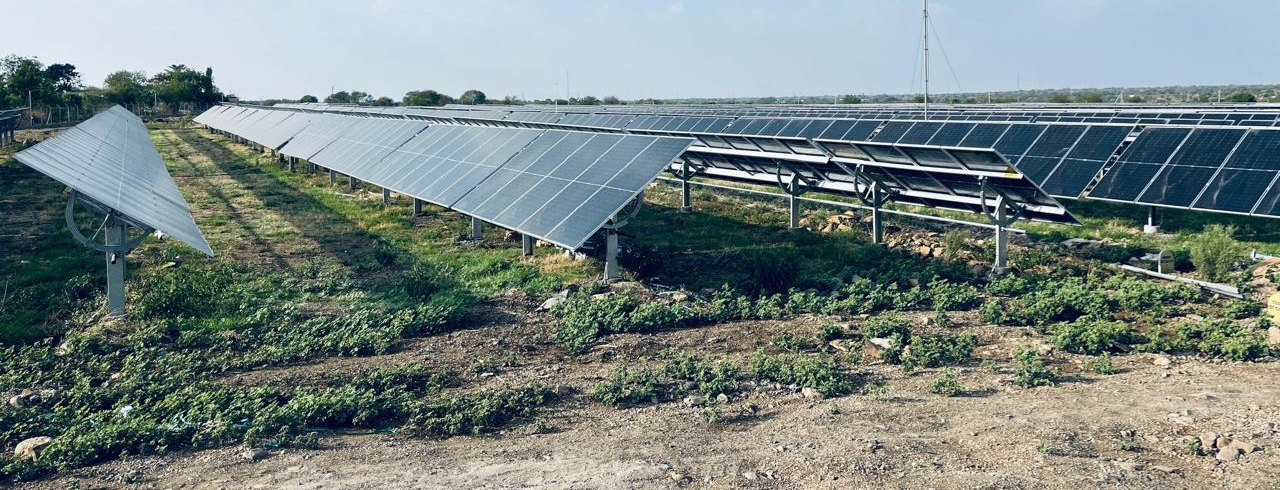
A ballasted single-axis tracker with an A-frame and arc structure. Wind-tunnel verified at 47 m•s (105 mph). Sites from small arrays to 200 MW+ operate on four continents.
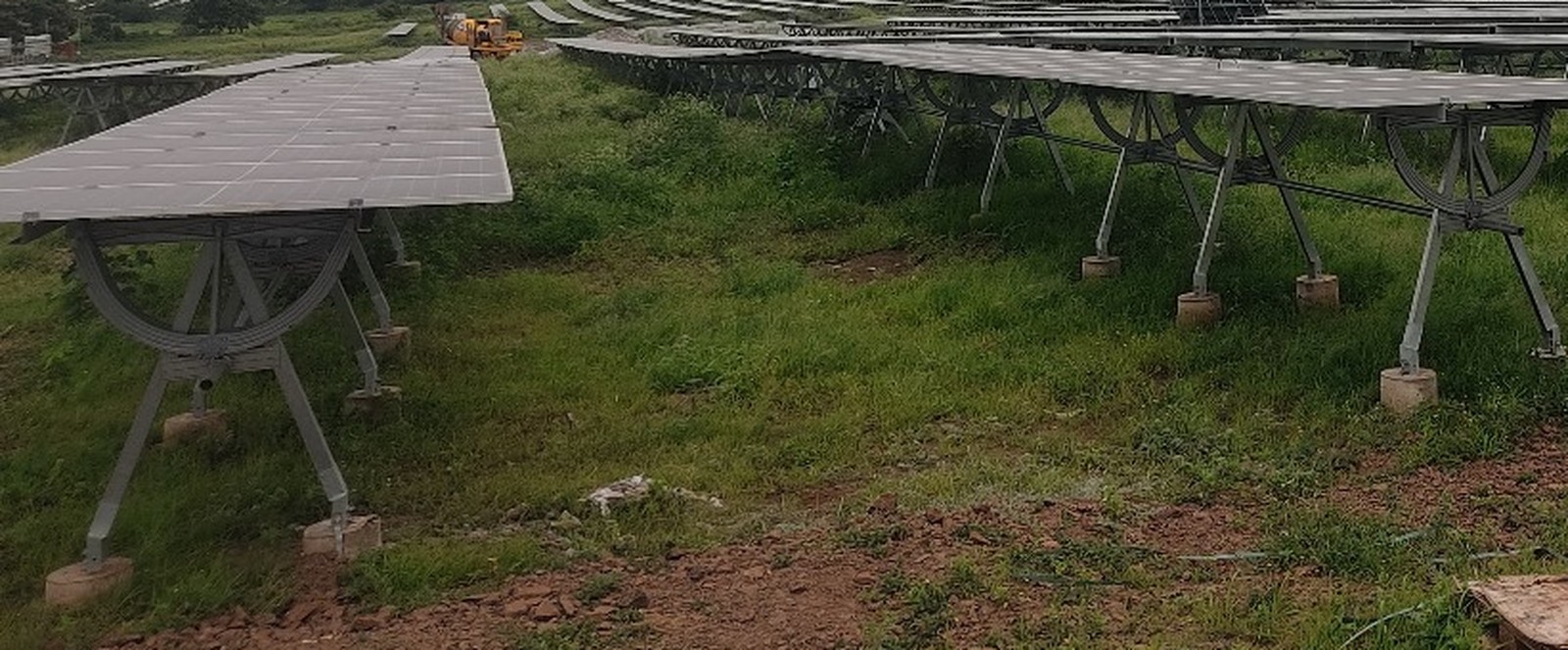
Geotech decides the foundation. The A-frame does not change. Clients pick the option that meets wind, soils, and schedule after design safety factors are met.
Slipform extruded ballast
01
Continuous concrete track, in production since 2012. Optional white reflective finish for bifacial gain. Fire break, robot path, and steel isolation in one pour.
Precast / cast-in-place ballast
02
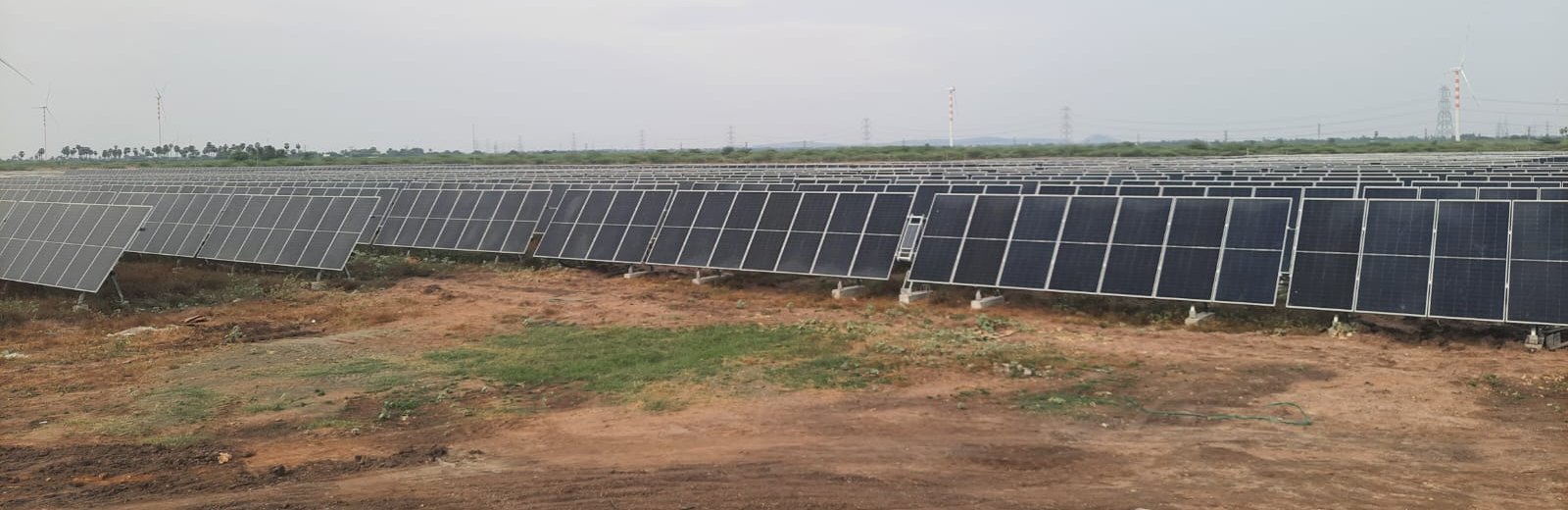
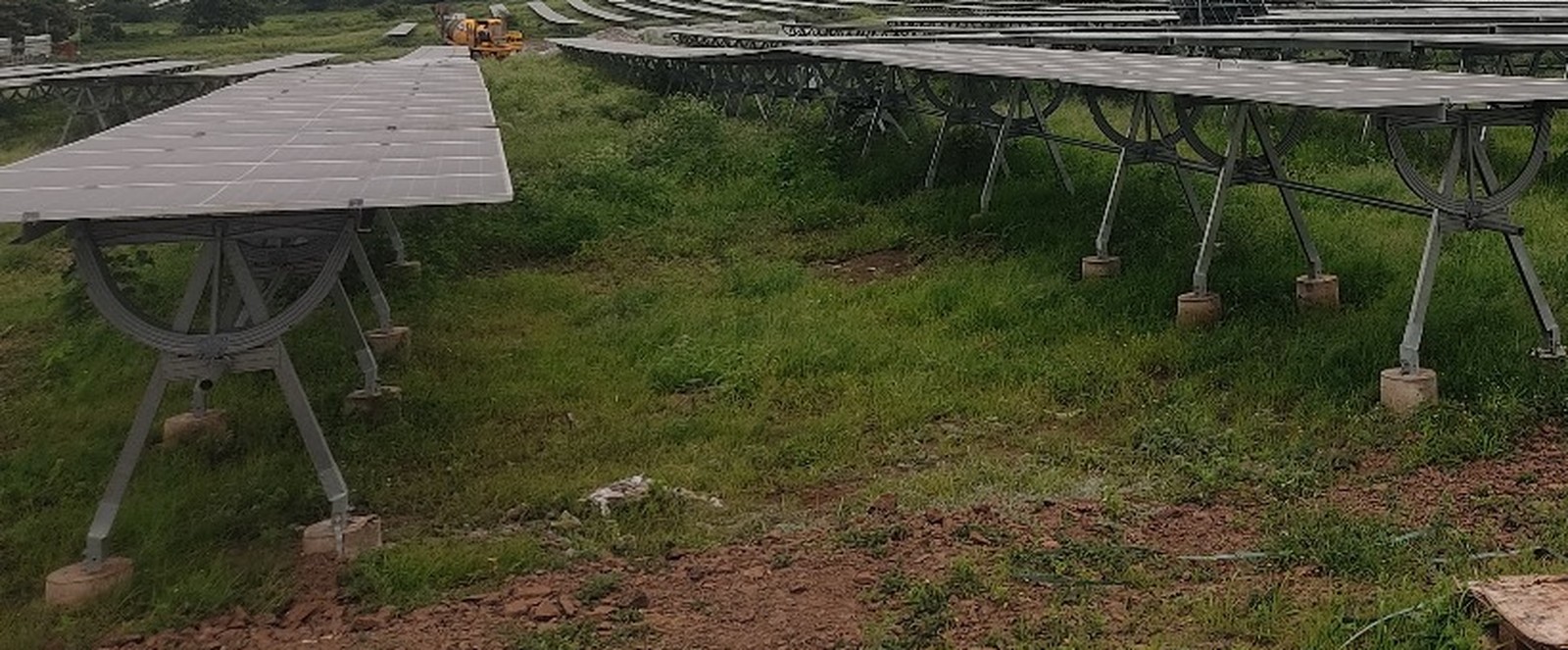
Factory precast or site-cast concrete ballast where piles are not wanted — no penetration, a fast set, and a path to a reflective finish.
Micropile
03
For rock, hardpan, and restricted vibration — small-diameter piles instead of large driven sections.
Single pile
04
Conventional steel piles where soils allow penetration and corrosion class is acceptable.
GCCM roll-out (2026 NPI)
05
Cortex geosynthetic cementitious composite mat. Roll, wet, and install with skid steers. Each earth strip is 2.384 m east to west; grass between rows is 4.24 m (GCR 0.35). Built for brownfield speed, without a long geotechnical campaign.
Cable earth anchors (2026 NPI)
06
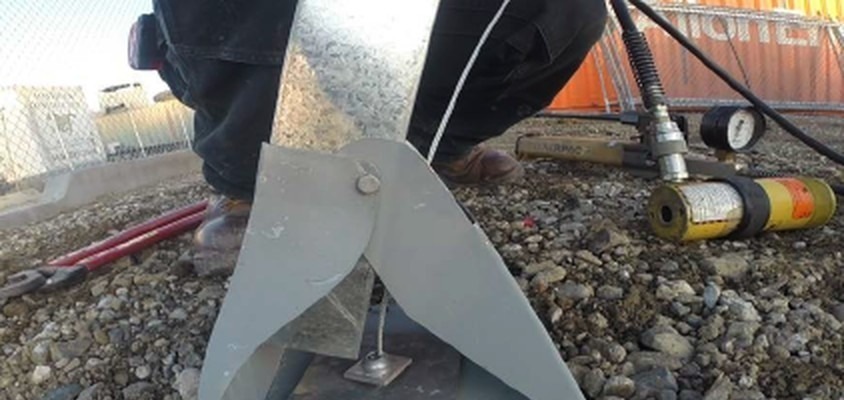
Gripple Solar Anchoring Kit (PVAK) — percussion-driven cable anchors with a Dynamic tensioner. Tension flips the head, duckbill-style, into a load-bearing soil cone. For a few tables in remote or access-limited locations where a pile driver or ballast train is not worth mobilizing.
Cortex Composites — licensed manufacturer
Cortex is a non-woven geosynthetic cementitious composite mat. It arrives dry, conforms to grade, hydrates with water, and hardens without formwork or a batch plant. Komorebi is a licensed manufacturer.
Thickness by row — 105 mph (47 m•s)
| Row | Stack | Total |
|---|---|---|
| Exterior end | 18.75 mm + 14 mm | 32.75 mm |
| Exterior middle | 2 × 14 mm | 28 mm |
| Transition | 18.75 mm | 18.75 mm |
| Interior | 14 mm | 14 mm |
See how we combine Alion Energy, Cortex Composites, and specified plant to add more AI compute.
View the install sequence (NDA)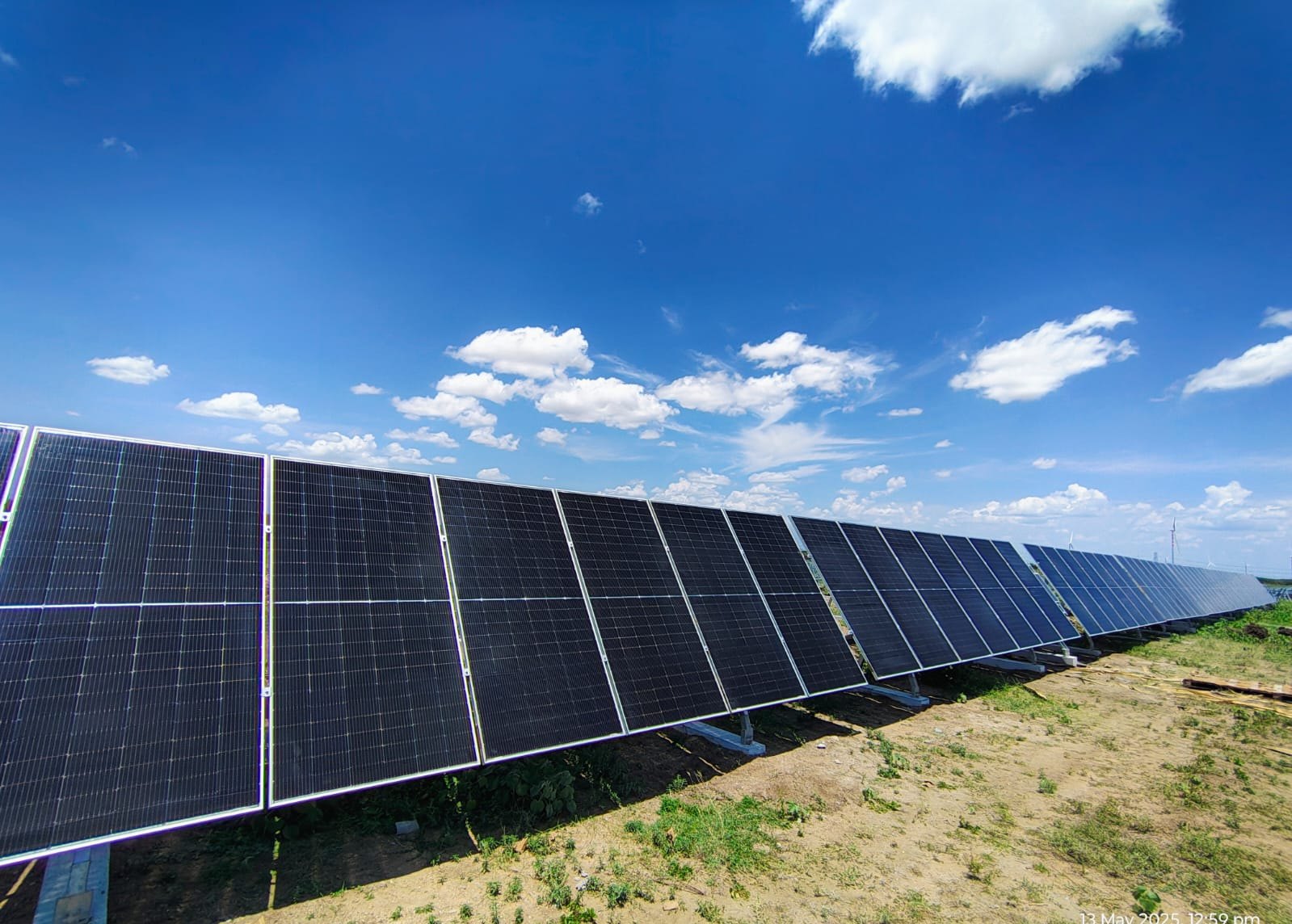
You roll the sheet to reject heat. Specifying it white is how that sheet also charges storage as the afternoon falls off. Same field. Same interconnect. About four percent more energy at the meter — not more megawatts.
Commercial equipment — not licensed
Specified bench












Catalogue equipment we buy. Marks of their owners — not an exclusive or endorsed partnership.
For large, mature technologies Komorebi is a buyer, not a licensee. We specify commercial products, integrate them on the thermal ladder, and keep rack cooling independent of recovery. Photographs below are illustrative of the equipment class — not OEM product shots.
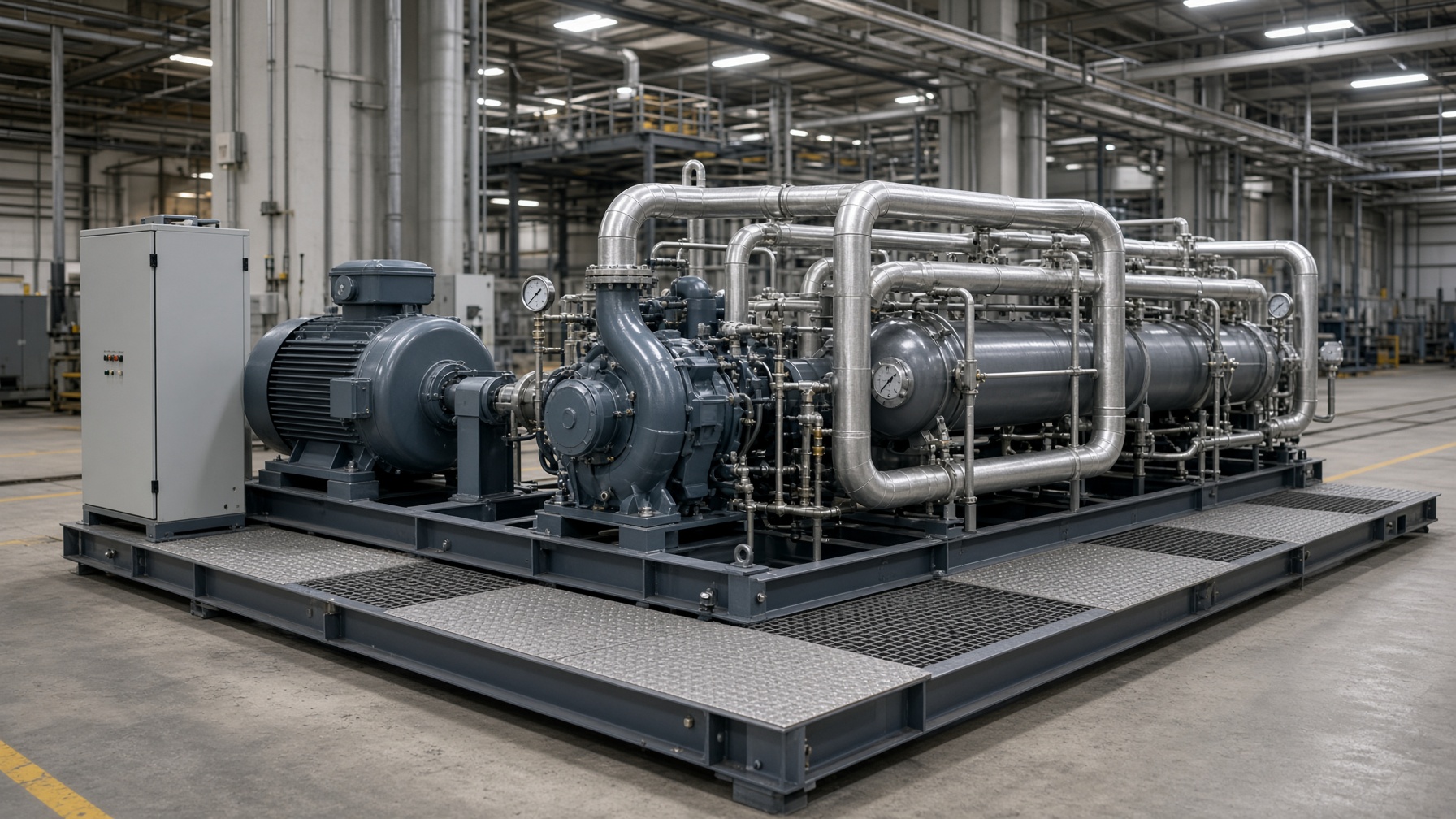
High-temperature heat pumps for the thermal ladder after Stage 1 cooling is proven — including machines that deliver 160°C process heat.
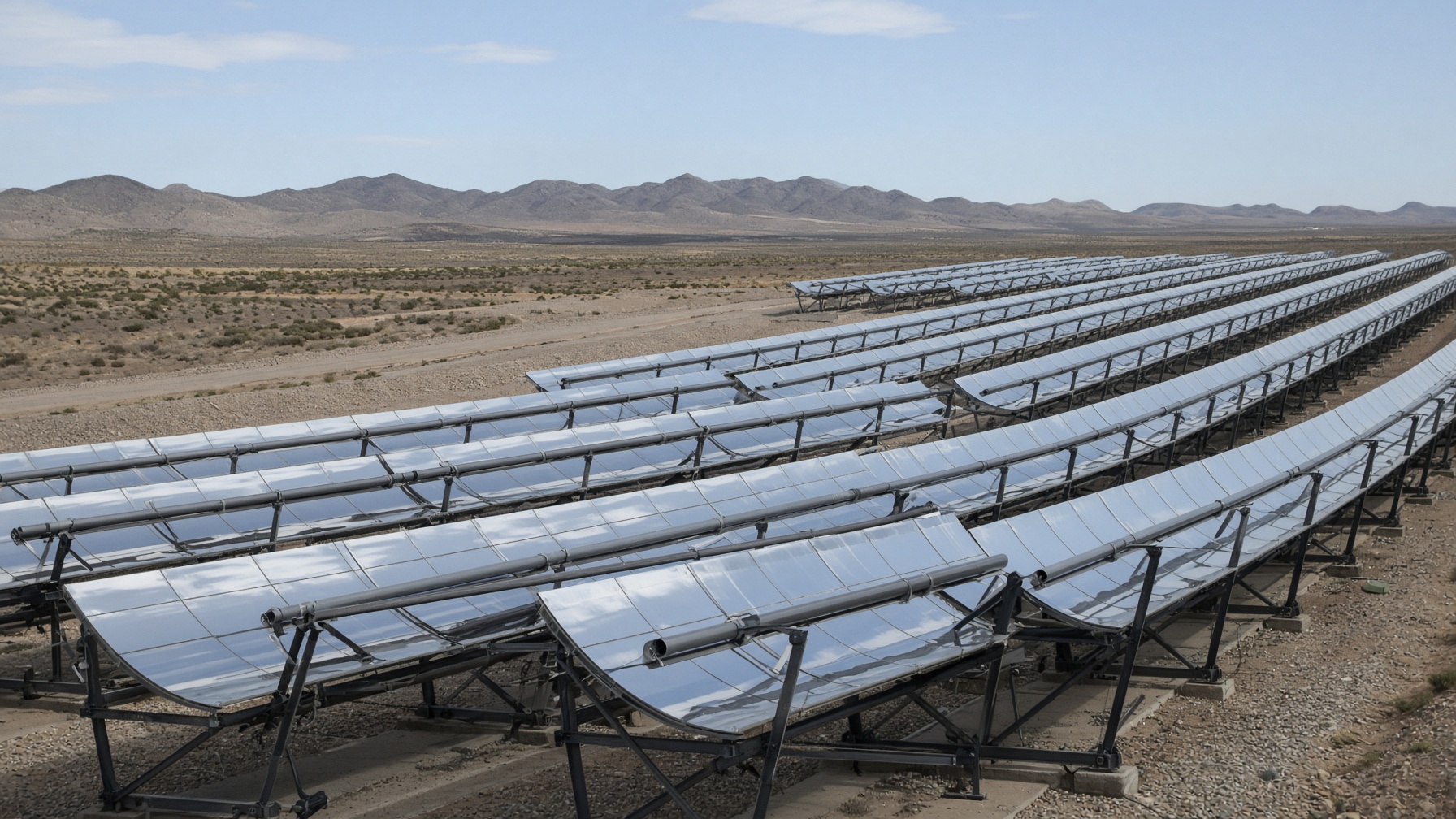
Proven parabolic-trough collectors for process-heat upgrades on recovered brownfield aperture — including 160°C troughs, not a science project.
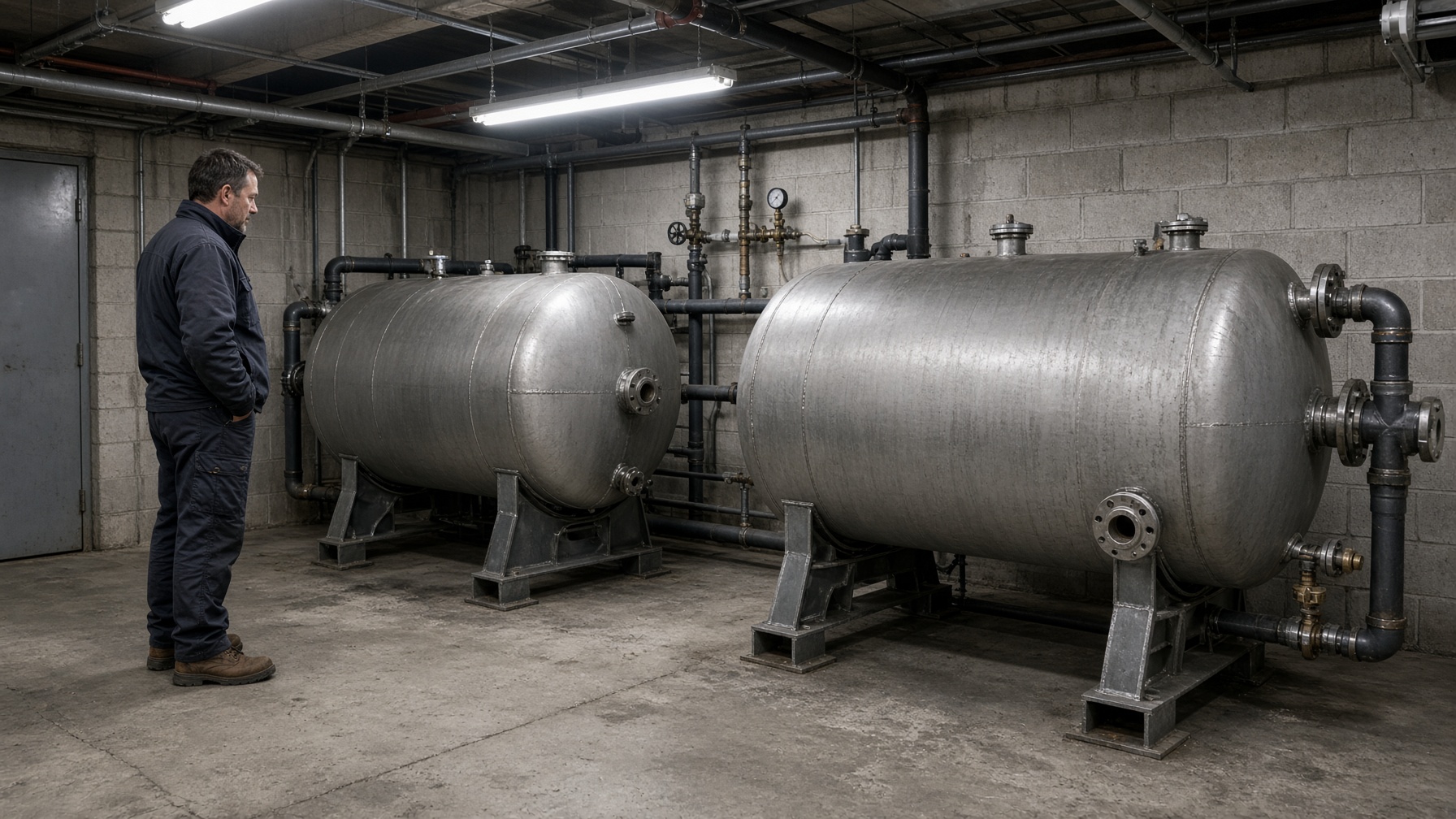
Shop-welded indoor steel tanks so recovered heat and trough output become hours, not a momentary dump — modular, plant-room scale, not a field of silos.
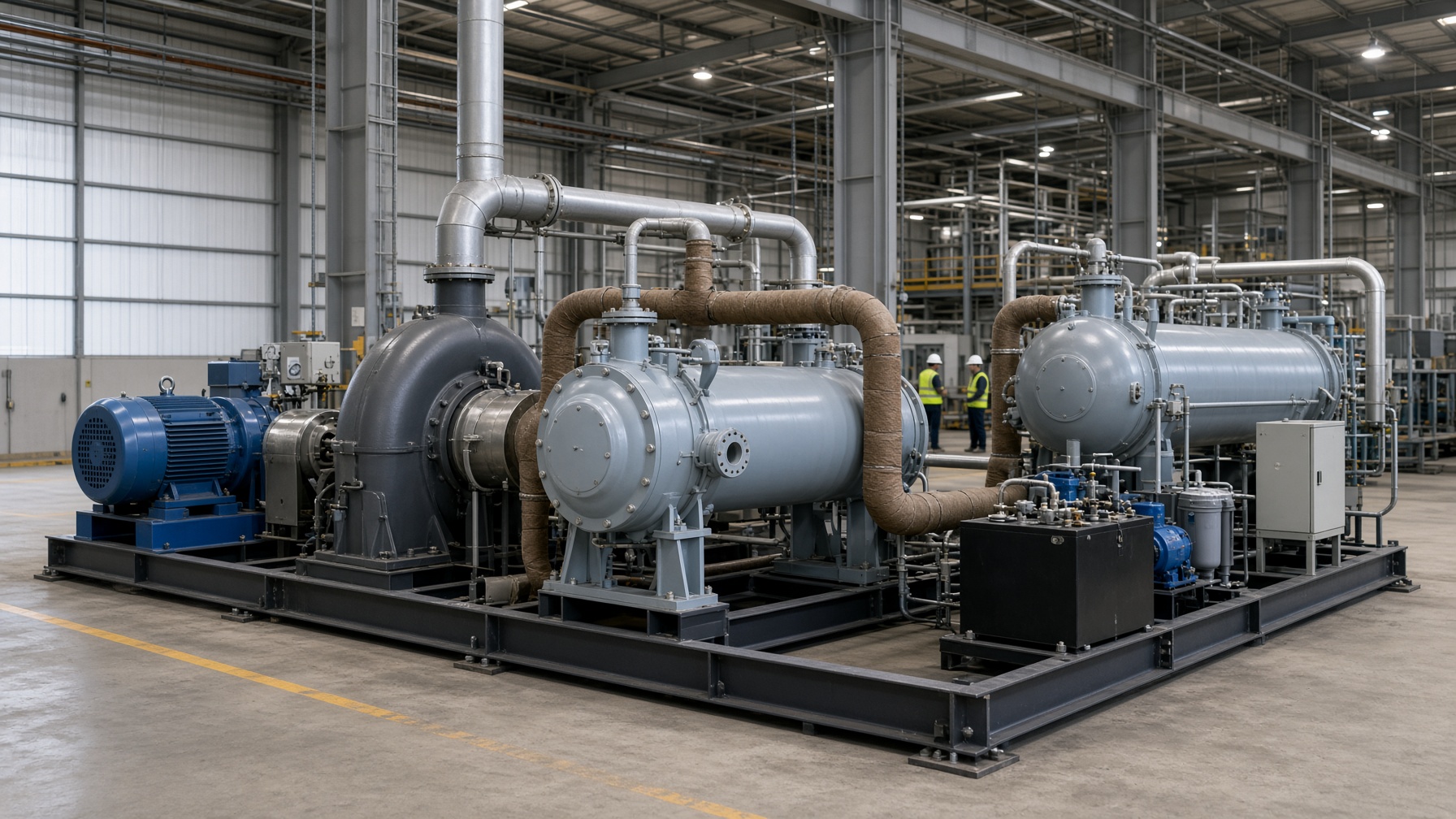
Qualified heat — AI, generators, CSP — converted into electrical hours. Original dry coolers can shift onto ORC condenser duty.
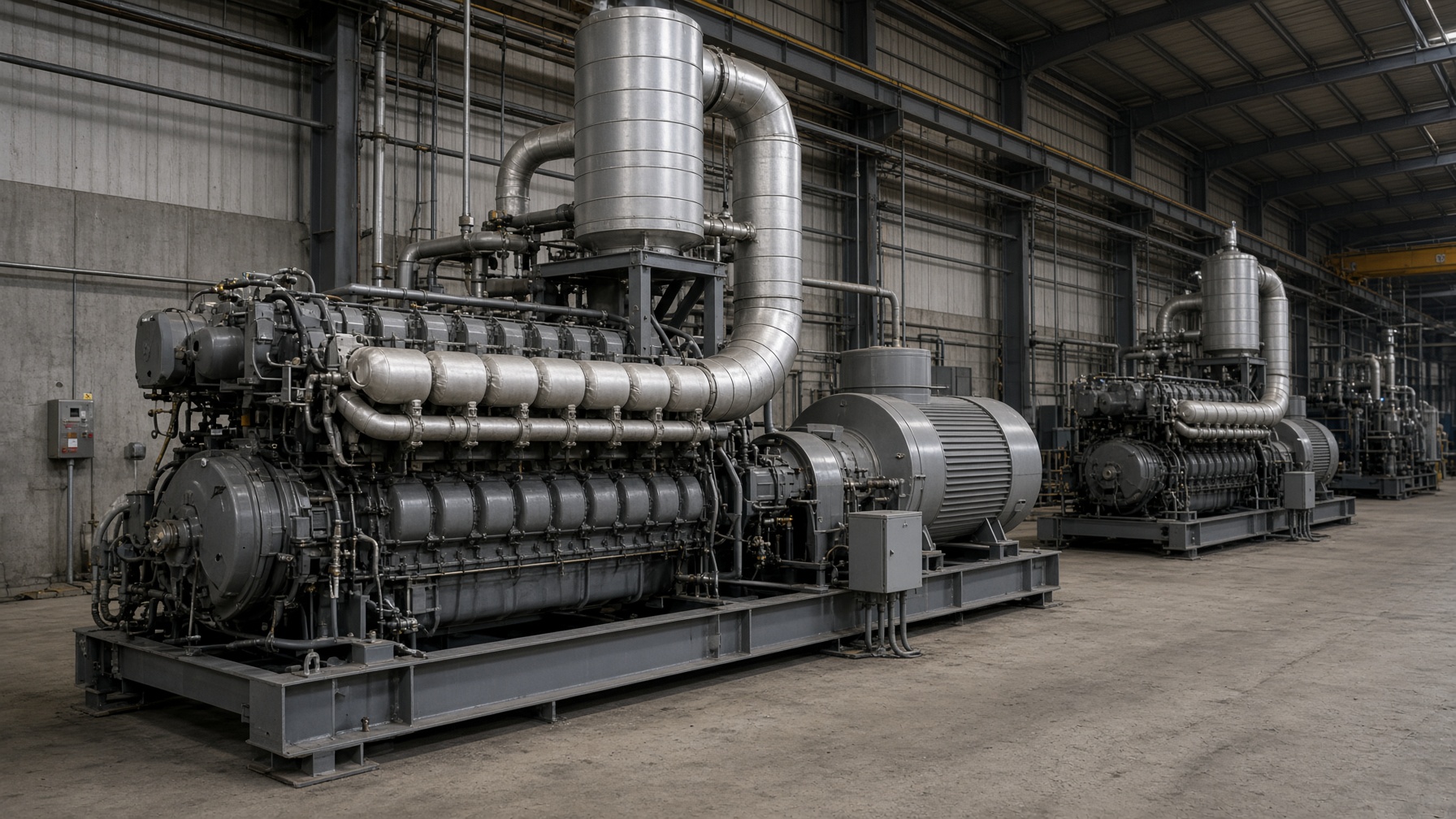
Qualified generator and engine exhaust into the same TES/ORC stack, asset-by-asset, only when recoverable heat and OEM interfaces pay.
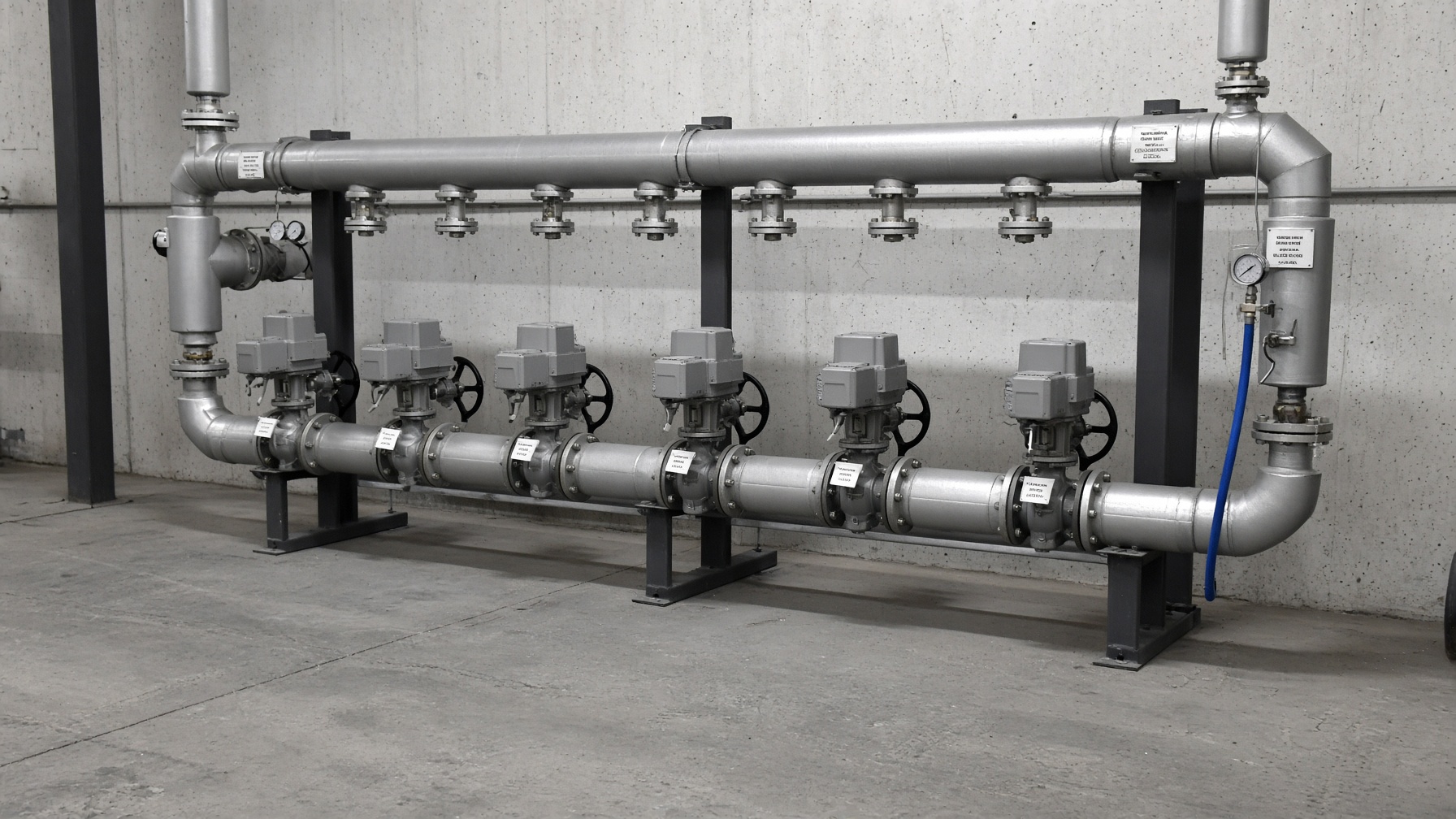
Ground-coupled loops, mixing manifolds, and flow control from industrial automation and irrigation catalogues.
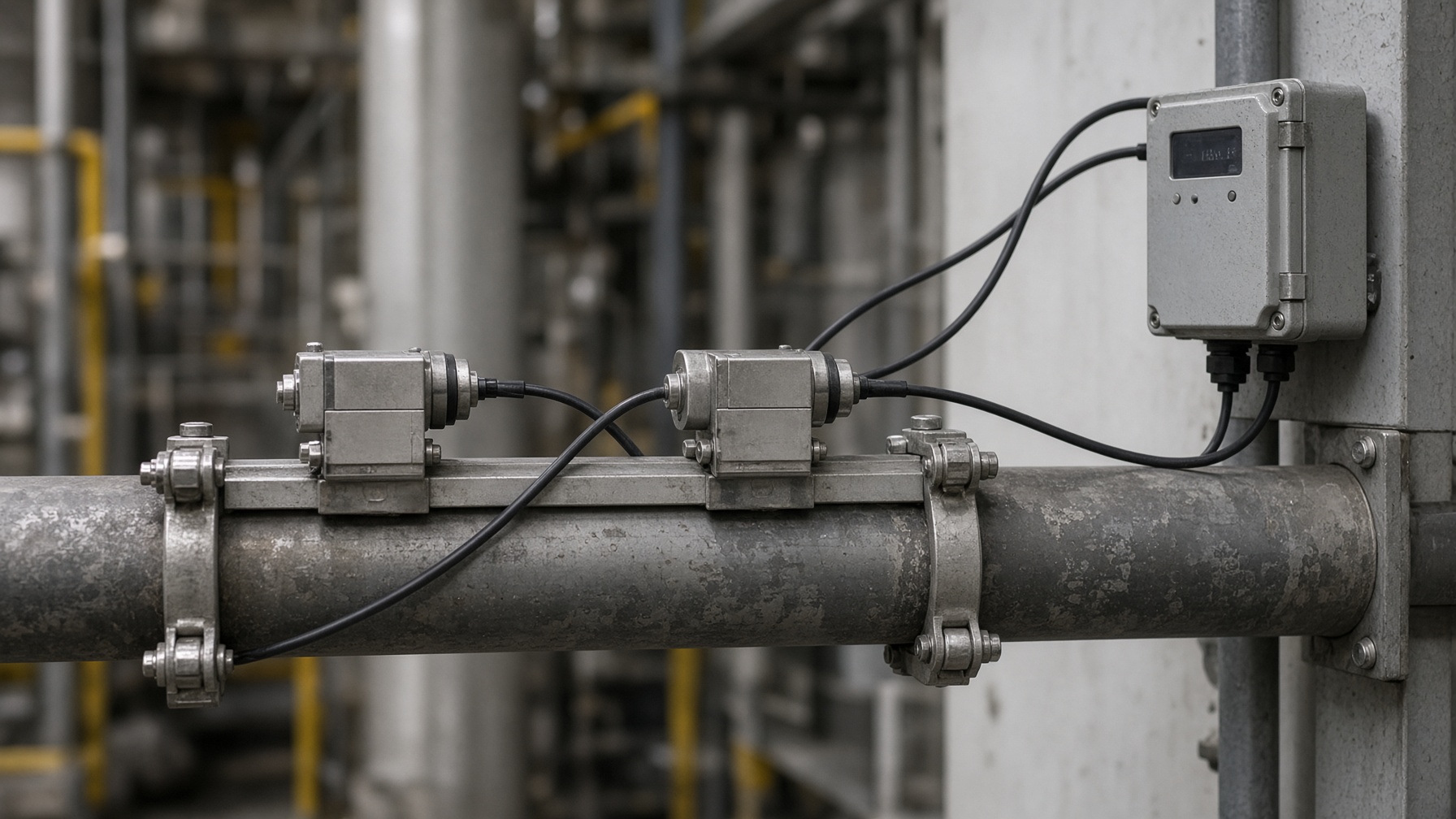
Clamp-on ultrasonic metering and industrial flow sensing from market leaders.
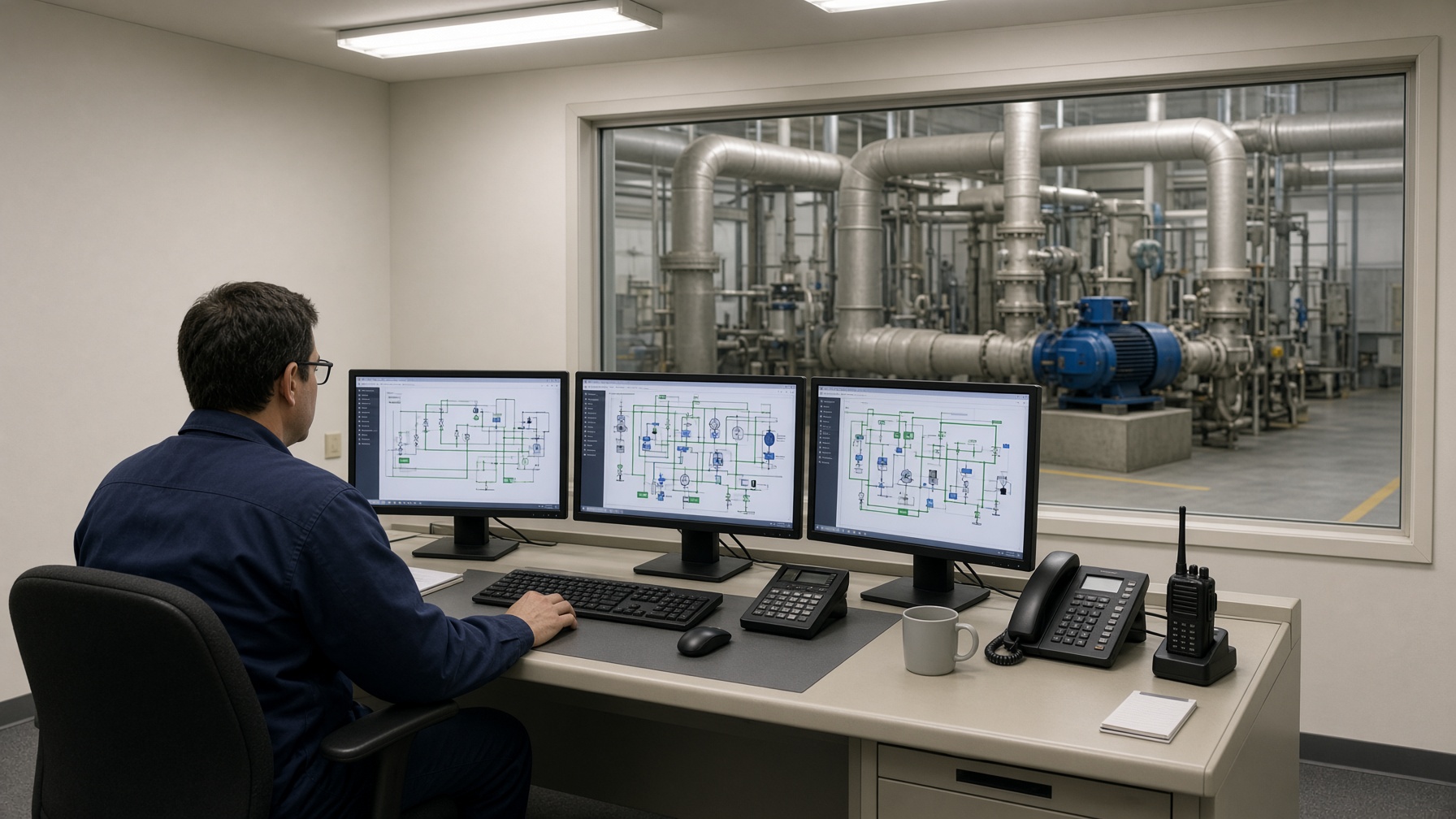
A plant digital twin and model-predictive controller sit above the meters. Loop, TES, heat-pump, and ORC setpoints are dispatched from the control room — not from isolated local loops.
A briefing covers which foundation, which reflector, and which supplier stack fits an existing 100 MWdc+ PV farm or a constrained campus.
Request a briefing